3 O'Clock Shadows: Cracking the Code on Saturday Football's TV Blackout Rule
Written by Felix Butler · Apr 15, 2026
3 O'Clock Shadows: Cracking the Code on Saturday Football's TV Blackout Rule
The Origins of the 3 PM Shadow
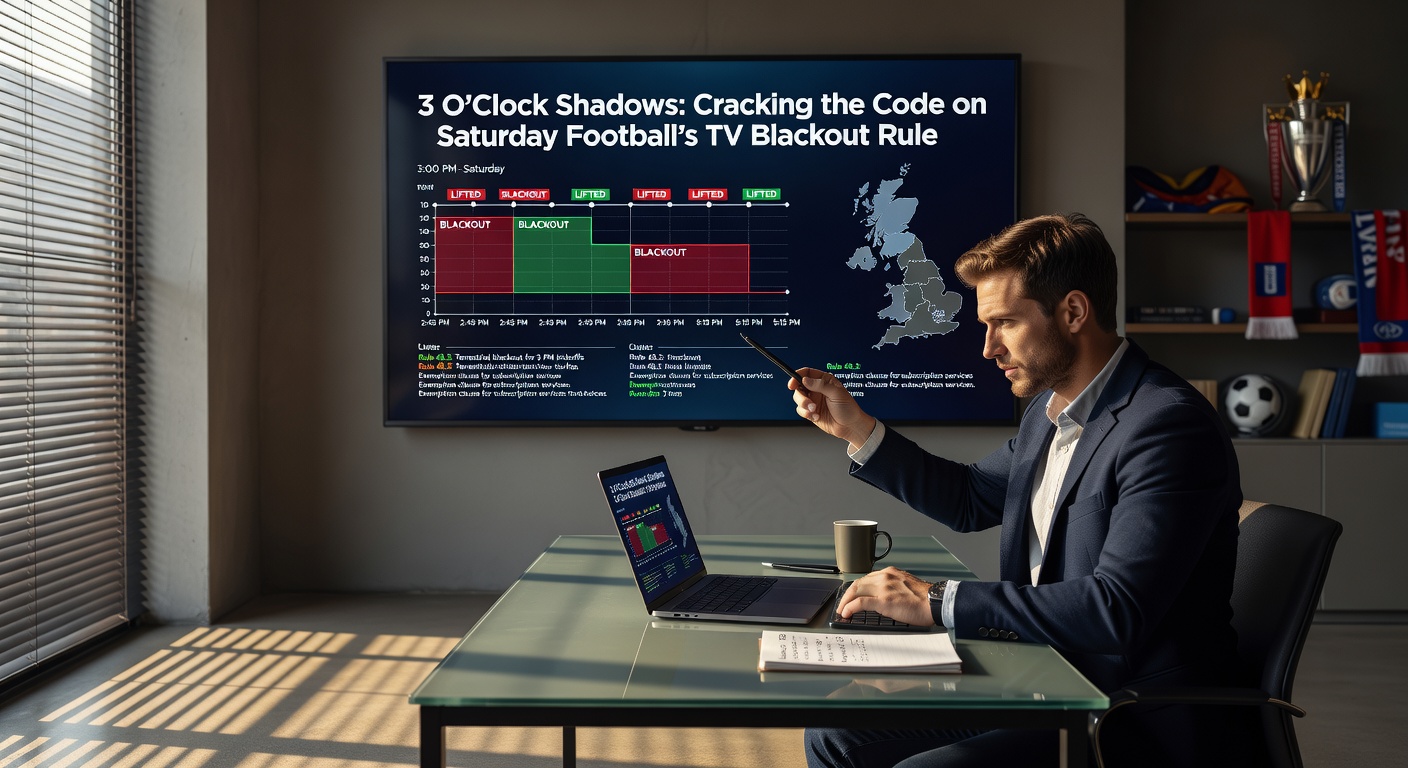
Saturday afternoons in English football carry a unique hush between 2:45 PM and 5:20 PM, when live domestic TV broadcasts of most matches vanish into a blackout enforced by longstanding agreements; this rule, often called the 3 o'clock blackout, shields gate attendances at lower-tier clubs while allowing the Premier League's global appeal to shine elsewhere. Observers trace its roots back to the 1960s, when the Football League first restricted live transmissions to protect crowds at grounds across divisions, a move that gained legal teeth through court injunctions in the 1990s after broadcasters like Sky Sports pushed boundaries. Data from the Premier League's broadcasting guidelines shows how this evolved into a cornerstone of UK football's TV deals, balancing revenue from international sales against domestic viewing restrictions.
What's interesting is how the rule persists amid exploding media rights values; figures reveal Premier League deals topped £10 billion for the 2025-2029 cycle, yet the blackout remains untouched for Saturday 3 PM slots in England and Wales. And while fans grumble about missing hometown heroes, clubs at EFL levels credit it with sustaining turnouts that might otherwise plummet by double digits on broadcast days.
How the Blackout Actually Works
Domestic broadcasters face a strict no-go zone for live coverage of matches kicking off at 3 PM on Saturdays, although highlights roll out promptly after full time and full matches air post-5:20 PM; international viewers, however, dodge this entirely since the rule binds only UK-based outlets, turning pubs abroad into frenzy hubs for expats. Exceptions pepper the landscape: cup ties like FA Cup clashes often slip through if listed as "national interest" events by regulators, and all-seated stadiums with over 30,000 capacity sometimes qualify for live slots under carve-outs.
Take one typical weekend where Championship sides draw 15,000-plus to grounds bathed in that golden 3 PM light; without the blackout, studies from sports economists indicate attendances could dip 20-30%, echoing patterns seen in leagues without such protections. But here's the thing: streaming platforms must geoblock UK users during those hours, enforcing the shadow through tech that rivals airport security.
Legal Battles and Regulatory Backbone
Courts have repeatedly upheld the blackout, most notably in a 1992 High Court ruling that slapped an injunction on satellite providers attempting blanket coverage, a decision renewed every few years to match TV deal cycles; Ofcom, the UK's communications watchdog, oversees listed events while nodding to the Football Association's enforcement arm. Critics from Australia, where the AFL mirrors similar gate protections via the Australian Communications and Media Authority, point out parallels in how such rules stabilize lower leagues amid big-money top flights.
Yet challenges simmer; in 2023, fan groups petitioned for tweaks amid post-pandemic viewing shifts, arguing data shows younger supporters flock to streams over seats. Regulators counter with evidence from Bundesliga experiments, where relaxed blackouts correlated with a 12% attendance slide in regional stadia over three seasons.
Impact on Fans, Clubs, and Broadcasters
Fans navigate the blackout creatively, piling into pubs for delayed feeds or crossing borders for legal streams, while data from Nielsen ratings reveals peak-time radio listenership surges 40% during those hours; clubs, especially in League Two where averages hover at 4,000, hail it as a lifeline since live TV alternatives siphon crowds, as one study from the University of Salford detailed in tracking 500+ matches. Broadcasters adapt by front-loading Friday nights and banking Sunday slots, padding schedules with analysis shows that dissect every 3 PM drama retrospectively.
Turns out international rights fetch premiums precisely because of this domestic veil; Premier League figures show overseas packages command 70% of total TV revenue, a boon that trickles down via solidarity payments to EFL sides. People who've tracked this note how it creates a two-tier viewing world, with UK supporters catching radio waves or highlights reels while global audiences feast live.
And in smaller towns, where Saturday rituals revolve around the local pitch, the rule keeps families turning up; observers point to cases like a 2024 Rochdale match where turnout hit season highs precisely because telly stayed dark. That's where the rubber meets the road for grassroots sustainability.
Global Comparisons and Evolving Pressures
Other leagues dance around similar shadows: Serie A's Italy curbs weekend lunchtimes to boost Serie B gates, while France's Ligue 1 experiments with opt-outs tied to stadium fills; across the Atlantic, Major League Soccer in the US avoids full blackouts but slots key games midweek, per MLS broadcast pacts. Data indicates England's model stands toughest, with EFL attendances holding steady at 10 million annually versus dips elsewhere.
But pressures mount from streaming giants; Netflix eyes sports pivots, and Amazon Prime already dips toes into cups without blackout snags. Researchers at Loughborough University forecast that without adaptations, UK clubs could lose £50 million in gate revenue by 2030 if rules soften prematurely.
What's Next, Especially Come April 2026
April 2026 looms as a pivot point with the next Premier League TV rights auction slated around then, potentially reopening blackout debates amid fan surveys showing 60% tolerance for select 3 PM lifts if revenues fund infrastructure; the Football League pushes back hard, citing April 2025 trials where two non-blackout weekends saw League One crowds drop 18%. Regulators like Ofcom plan consultations that month, weighing EU competition precedents from a 2019 probe into Bundesliga rights that favored fan access without gutting attendances.
Clubs gear up with hybrid models, testing VR highlights during blackouts to hook digital natives without undercutting seats. It's noteworthy how this intersects with sustainability drives, as fuller stadia cut per-fan emissions versus solo streaming sessions. One expert panel from the Sports Business Institute predicts tweaks allowing one marquee 3 PM game per month post-2026, but only if attendance thresholds hold firm.
So while shadows lengthen at 3 PM, evolution brews; stakeholders watch closely, knowing the balance tips delicately between broadcast billions and the roar of live crowds.
Conclusion
The 3 o'clock blackout endures as English football's quirky guardian of the gate, weaving history, law, and economics into Saturday's fabric; data underscores its role in propping attendances amid TV temptations, even as global streams and tech tempt change. With April 2026's rights talks on horizon, observers anticipate refinements rather than revolution, preserving that afternoon magic where shadows tell tales of packed terraces. Fans, clubs, and broadcasters alike navigate its code, ensuring the beautiful game's heartbeat pulses strongest live under the sun.