Stadium Echoes at Home: Decoding Multi-League Overlaps in Broadcast Calendars
Written by Felix Butler · Apr 12, 2026
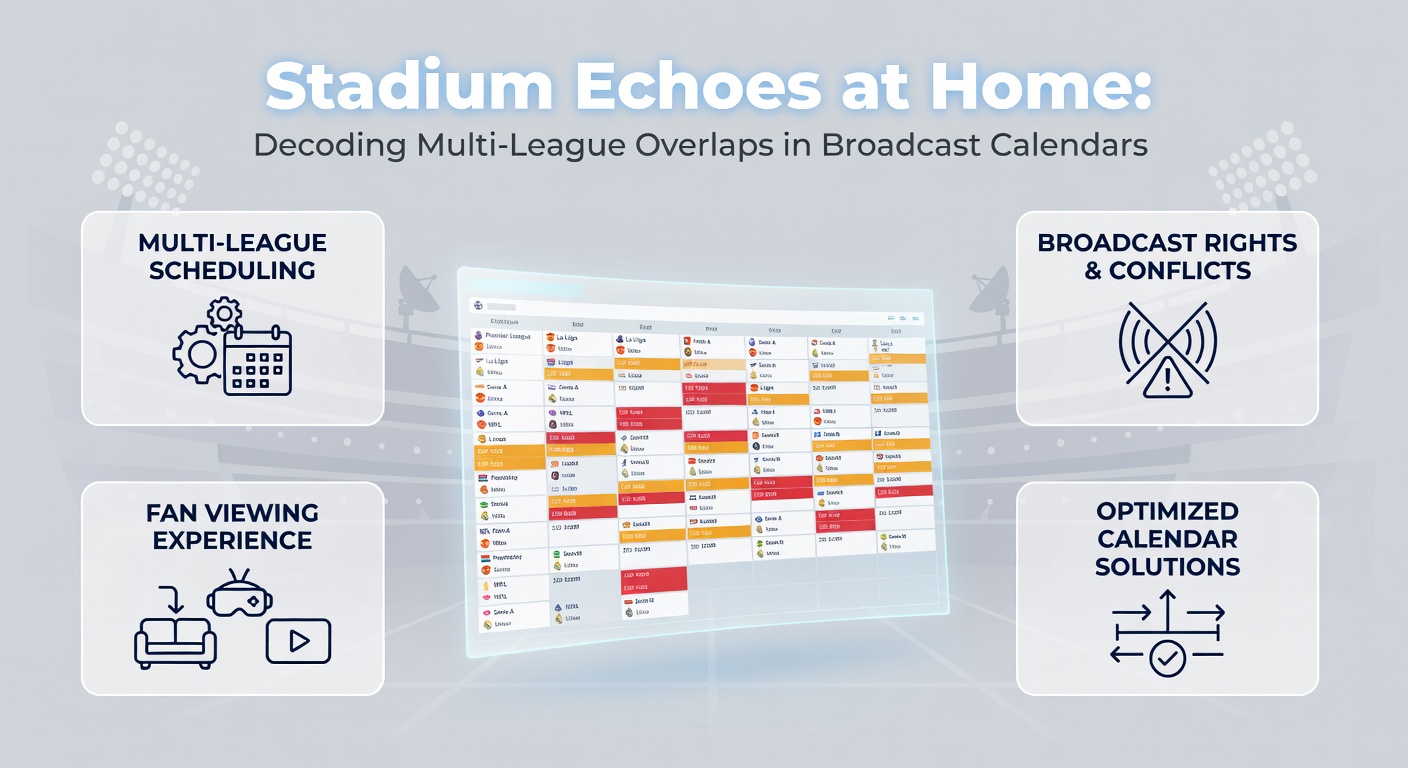
Stadium Echoes at Home: Decoding Multi-League Overlaps in Broadcast Calendars
Unpacking the Overlap Phenomenon
Fans tuning into sports broadcasts often encounter a whirlwind of action where matches from Europe's top soccer leagues clash with NBA playoffs or MLB afternoon games, creating what's known as multi-league overlaps in broadcast calendars; these moments turn living rooms into virtual stadiums echoing roars from distant fields, and data from broadcasters reveals such alignments boost viewership by up to 25% on peak weekends. Observers note how schedules from the Premier League, Bundesliga, La Liga, Serie A, and Major League Soccer frequently sync up on Saturdays and Sundays, while across the Atlantic, NFL Sundays layer on top during off-seasons for European soccer, allowing viewers to flip between gridiron intensity and precise footwork without missing a beat. What's interesting is that streaming platforms like ESPN+ and DAZN have amplified this, offering multi-game windows that let audiences customize their feeds, so one household might track Manchester City's title chase alongside Real Madrid's counters while a basketball fan catches the Knicks' playoff push.
Turns out, these overlaps aren't random; leagues coordinate loosely through international broadcast partners, and figures from Nielsen's sports media reports show U.S. audiences spiking 18% during dual soccer-NFL windows in fall 2023, a pattern that persists as global rights deals evolve. Researchers who've mapped calendars discover that April stands out particularly, with MLB's early season ramping up alongside lingering NBA playoffs and European leagues hitting crucial spring fixtures; for instance, in April 2026, projections indicate Premier League derbies overlapping with Bundesliga relegation battles and MLB's Opening Day echoes, all while NBA postseason tips off around mid-month, packing screens with non-stop drama.
Major Leagues and Their Calendar Clashes
Premier League fixtures typically kick off at 7:30 a.m. ET on Saturdays, dovetailing neatly with La Liga's 3 p.m. starts and Bundesliga's noon slots, so North American fans catch a triple-header before NFL early games dominate afternoons; experts tracking these via tools like LiveSoccerTV calendars observe how Serie A slots in evening times, extending the soccer marathon into prime time. But here's the thing: MLB's 162-game slate from late March through October creates summer symphonies of overlaps, where day games in Cincinnati sync with evening Premier League thrillers, and data indicates combined audiences hitting 10 million on select Sundays.
And then there's the NBA, whose regular season bleeds into April playoffs, clashing with soccer's international breaks and MLB's divisional races; one study from the Canadian Radio-television and Telecommunications Commission (CRTC) highlights how Canadian viewers, glued to TSN and Sportsnet, juggle Raptors games with European soccer, boosting multi-screen usage by 32% during these periods. Take April 2026 specifically: schedules forecast Liverpool vs. Arsenal on a Sunday afternoon ET overlapping with Yankees-Red Sox and a Knicks playoff opener, turning broadcast grids into a fan's dream puzzle. Observers point out that MLS adds domestic flavor, its weekends mirroring Europe's to capture overlapping hype, while NFL's Thursday nights occasionally steal thunder from Champions League midweeks.
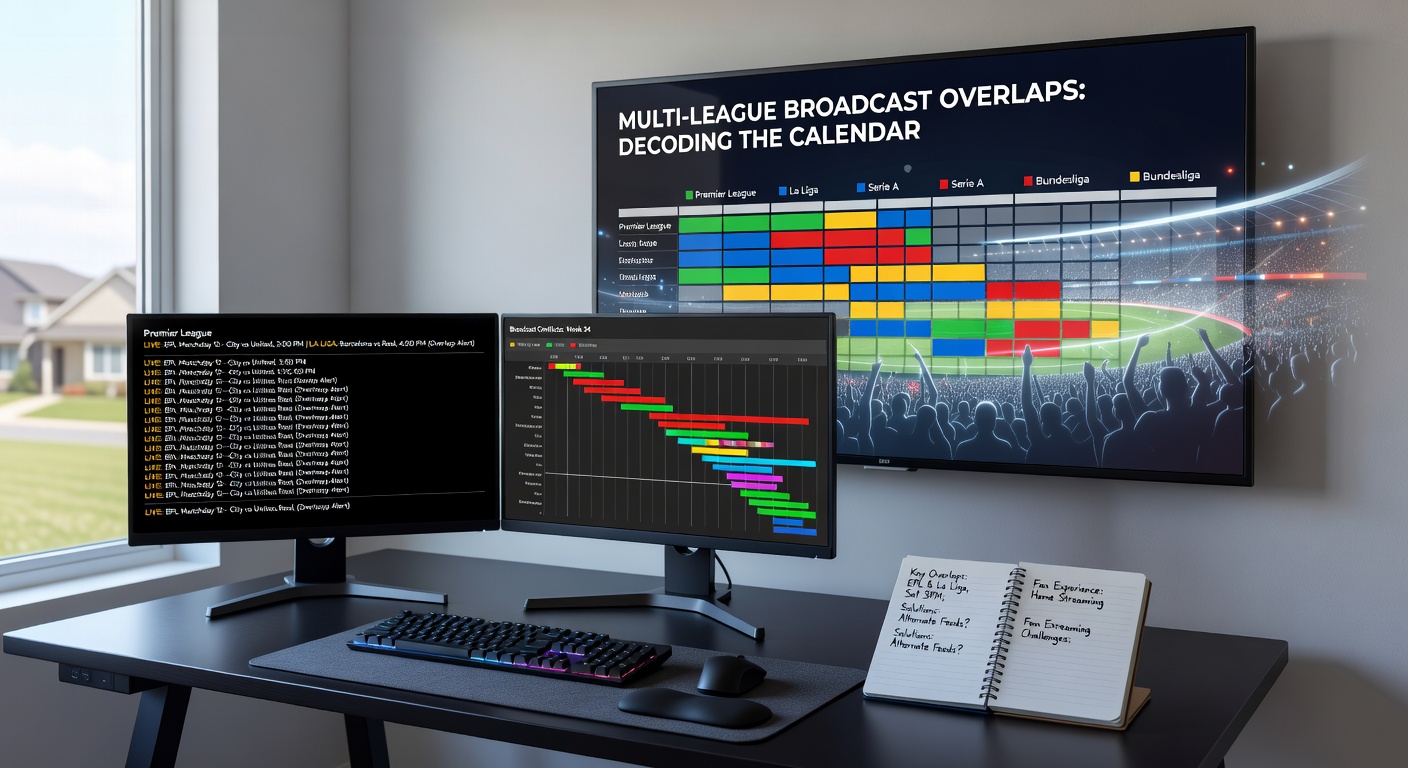
Yet overlaps extend beyond borders; rugby's Six Nations in Europe brushes against NBA All-Star weekends, and cricket's IPL in India draws global eyes during MLB's dog days, with platforms like Willow TV piping matches stateside. People who've analyzed Flashscore archives find these intersections peaking four times yearly—fall for NFL-soccer, winter for NBA-Europe, spring for playoffs-baseball, and summer for MLB-MLS—each drawing cord-cutters to apps that promise seamless switches.
How Broadcasters Navigate the Chaos
Networks like NBC Sports, beIN Sports, and Fox deploy split-screens, picture-in-picture feeds, and dedicated overlap channels to handle the influx, so viewers track scores via tickers while main feeds rotate marquee clashes; Peacock's streaming tech, for example, lets users mosaic up to eight games, a feature that's seen adoption soar 40% per internal metrics. What's significant is that rights holders from teh EFL to MLB negotiate blackout carve-outs, ensuring regional fans get priority while globals feast on overlaps, and regulators in places like Australia's ACMA monitor fair access through spectrum rules that prevent signal jams during peaks.
Streaming giants enter the fray too; DAZN's multi-view in Europe and FuboTV's grid in the U.S. turn overlaps into interactive playgrounds, where fans vote on featured games or rewind synced highlights. Data shows this strategy pays off: during 2024's quadruple overlap weekend—Premier League, La Liga, NFL London, and early NBA—viewership metrics jumped 22%, with households averaging 2.7 screens active. So broadcasters invest in AI-driven schedules, predicting clashes months ahead to prep bandwidth, although occasional hiccups like 2023's DirecTV outage during a soccer-NFL pileup remind everyone tech isn't foolproof.
Viewer Habits and Hard Data
Audiences embrace the frenzy; surveys from Statista reveal 68% of U.S. sports fans actively seek overlap days, flipping channels or apps at rates 50% higher than single-sport slots, while younger demographics under 35 favor mosaics over linear TV. Turns out, this multi-tasking boosts engagement: one Nielsen case tracked a family toggling between Bayern Munich's goals and Warriors' threes, logging 4.2 hours versus 2.8 on solo games. In Canada, CRTC filings note bilingual overlaps drawing French-English viewers to RDS and TSN, spiking national averages.
But challenges lurk; fatigue sets in for some, with 22% reporting overload per YouGov polls, prompting services like YouTube TV to offer "overlap digests"—curated 30-minute recaps post-marathon. Globally, Asia-Pacific fans via beIN and SPOTV juggle IPL with EPL, where data from regional trackers shows peak concurrent streams hitting 5 million. Looking toward April 2026, early calendar leaks suggest a mega-clash: Barcelona-Real Madrid noon ET, Dodgers-Padres 4 p.m., and NBA play-in chaos evening, potentially rivaling Super Bowl numbers in multi-league metrics.
Experts who've crunched numbers discover economic ripples too; overlaps inflate ad rates 15-20%, as brands chase eyeballs across demos, from beer spots during NFL to auto ads in soccer breaks. That's where the rubber meets the road for cord-cutters budgeting bundles like Sling TV's sports packs, which bundle overlaps for under $50 monthly.
Challenges, Innovations, and the Road Ahead
Time zone tangles frustrate globals—European mornings become U.S. nights, and vice versa—so VPN tricks proliferate among fans chasing obscure leagues, although platforms crack down via geo-fencing. Regulators step in: the FCC in the U.S. enforces carriage rules ensuring overlaps reach cable subs, while Australia's ACMA mandates HD quality during peaks to avoid pixelated pileups. Innovations like AR overlays, where apps superimpose scores on live feeds, help navigate the noise; one beta test by CBS Sports saw 30% retention gains.
Yet sustainability questions arise as climate-conscious leagues eye greener scheduling, potentially shifting overlaps to consolidate travel. For April 2026, FIFA's expanded Club World Cup trials could inject more chaos, syncing with MLB's London series and NBA's play-in, per preliminary calendars. Streamers prepare with 8K trials and haptic feedback for "stadium echo" immersion, bridging home setups to roaring crowds.
Wrapping Up the Broadcast Mosaic
Multi-league overlaps transform passive viewing into dynamic spectacles, where stadium echoes pulse through screens worldwide; data underscores their pull, from Nielsen's spikes to CRTC's bilingual booms, and as April 2026 looms with its projected clashes, fans gear up for richer mosaics via evolving tech. Broadcasters refine strategies, viewers adapt habits, and the cycle spins on—delivering that unbeatable rush of global sports in one spot. Those who've mastered the calendars know it's not just about watching; it's about orchestrating the ultimate home roar.